Pages

Monday, January 23, 2012

Snow Goose Hunting Adventure - Part 2


Snow Goose Calling

Dozens of good goose calls are available, all of which are effective in the hands of a good caller. It’s helpful to listen to wild birds and try to imitate them with your calls. There are no better teachers. But unless you have a friend who is a skilled caller who can teach you, you also should purchase an instructional CD, DVD or audiotape that will allow you to hear the actual sounds of geese and good calling by practiced goose hunters. Study this and try to duplicate the sounds used for various situations. After some practice, record yourself on a tape recorder and decide for yourself if you’re good enough to start calling in the field. Listen for weaknesses in your repertoire, then practice to improve them.

Snow Goose Hunting Tips

There’s no such thing as a casual snow goose hunt, one reason many waterfowlers don’t participate. This sport requires large goose decoy spreads and constant scouting.

First, you must study movement patterns of geese where you want to goose hunt, then secure permission to hunt where concentrations are located. (Most hunting is on private hunting lands.) When geese start using a field, they stay until the food supply is exhausted. Being there after they’ve started using the field and before they’ve eaten it out is the trick.

Elaborate ground blinds are nice but not necessary because a goose field usually produces only one or two good shoots before geese move elsewhere. Many goose hunters simply lie on their backs in the goose decoys and wear white or camouflage-pattern clothing. Pit ground blinds, portable ground blinds and makeshift ground blinds made from natural materials on-site also can be used, depending on where you hunt.

When it comes to snow goose decoy spreads, bigger usually is better. The decoys should be in place before sunrise to take advantage of the snow goose’s propensity for flying early.

The most important thing goose hunters should remember is to remain well hidden and motionless until birds are well within shooting range. Snow geese are wary, and if they see or hear anything out of place, they’ll avoid it. If approaching birds seem reluctant to land, flare off at the last minute or land consistently outside the decoys, chances are they are spotting the blind, hunter movement or something else that makes them nervous. Adjust as necessary.

Avoid the temptation to shoot when the first geese start dropping into your set-up. Veteran waterfowlers hold off until the lead geese are touching down and geese in the rear of the flock are well within gun range before making their move.

Remember this rule of thumb as well: If, when aiming, the end of your gun barrel covers more than half the bird, the goose is beyond 45 yards and is too far away for a clean kill.

If you’re not up to the tasks just outlined, consider hiring a hunting guide. These guys can show you the ins and outs of snow goose hunting, and after you’ve experienced a hunt first-hand, you’ll know whether you really want to make the required investment in time and hunting equipment to hunt on your own. Best of all, hunting guides do all the work. The hunter need not spend hours scouting, gaining hunting permission, and setting and retrieving goose decoys. For a reasonable fee, reputable hunting guides do all this and clean and pack your birds, too.

Snow Goose Hunting Conclusion

Snow goose hunting is challenging, for sure. Nevertheless, it’s a sport many of us find irresistibly attractive. Goose hunting allows us to perfect our skills with a shotgun and to go afield with men we enjoy and admire. Most of all, it gives us another excuse to be outdoors. Until you have sat in a goose spread and watched a fall or winter day unfold, develop and decline, you have missed one of life’s greatest pleasures.

Snow Goose Hunting Adventure - Part 1


Several goose hunters waited in a winter wheat field, scanning the morning skies above a huge spread of goose decoys. All was quiet for many minutes, then in the distance, they heard the first melodic strains of flying geese.

It was hard to pinpoint them at first, but soon they could make out the first long skeins of birds, little snowflakes floating in an orange sunrise. They were coming their way.

Minutes passed like hours. The calls of the snow geese grew in volume. Their forms grew in size. The goose hunters could tell now there were a thousand or more—a hundred here, a hundred there, in long lines and V-shaped wedges. Some flocks flew north, away from their goose decoy spread. But one held a steady course that would soon take it over their heads.

Two goose hunters began goose calling. One waved a white flag fixed atop a long pole. Would it be enough to attract their attention? One goose hunter gripped his shotgun tightly and wondered.

The last five minutes seemed like an hour. Most of the flock broke off, turning toward a large flock of geese feeding in another field. Only two dozen remained, but these were convinced their goose decoy spread was real. At 100 yards out, they cupped their wings and began swinging back and forth in the air as they flexed their rudders and dropped their landing gear.

Too late the birds realized their ruse. As one goose hunter shot, then another, the geese tried to turn and gain altitude. One goose hunter swung on a white bird and fired, then swung again and shot a blue. They hit the ground with hard thumps as he tried unsuccessfully to get another bird in his sights.

When it was over, this goose hunter was shaking. Excitement does that to some hunters. And snow goose hunting is exciting!

Snow Goose Facts

The snow goose, Chen caerulescens, is one of the world’s most abundant waterfowl species. Each year, snow geese nest on the Arctic tundra and then travel to southern wintering grounds in very large, high-flying, noisy flocks. The swirling white of a descending flock suggests snowfall, but among the white birds are darker individuals. Until recently, these “blue geese,” as the dark birds are called, were considered a separate species. They are now recognized as merely a dark “morph,” or form, of the snow goose.

Adult snows are medium-sized (weighing 5 to 8 pounds) and have a pinkish bill with a black “grinning patch.” White morphs are white all over except for the black primaries on each wing. Blue morphs have a mostly white head and neck, a dark gray-brown body and black primary and secondary feathers on the wings.

Juvenile white morphs are gray above, white below and darker on the head and neck. The legs, feet and bill are gray, turning pink as the young birds age. Juvenile blues are mostly dark gray-brown with a lighter-colored belly and white under the tail. The wing linings are pale gray, contrasting with the dark body and black primaries in flight.

Biologists recognize three separate snow goose populations. The western population breeds in Alaska and Canada’s Yukon, Northwest and Nunavut territories and winters from Oregon south to Mexico, with concentrations in the central valleys of California. The midcontinent population breeds from Nunavut Territory east to Hudson Bay and winters in the U.S. Midwest south to Louisiana and Texas. The eastern population breeds on islands in the High Arctic, including Ellesmere and Baffin, then winters along the Atlantic Coast from Massachusetts to South Carolina, with concentrations in southeastern Pennsylvania, New Jersey, Delaware, Maryland, Virginia and North Carolina.

In winter, snow geese are highly gregarious and often feed in flocks numbering thousands of individuals. Migrants follow all four major North American flyways. Migration north from wintering areas takes place from February to May. Snow geese depart from the northern breeding areas in September and arrive in wintering habitats in November and December.

Snow Goose Population 

Around 1900, the snow goose population had ebbed to only 2,000 to 3,000 birds. But during the 20th century and into the 21st, the population burgeoned as snow geese took advantage of increased food supplies along migration routes and in wintering areas. In some areas, populations have increased as much as nine percent annually. Biologists estimate there are now 5 million to 6 million snow geese in North America, a population that may be too large to be environmentally sustainable.

Since 1998, goose hunters have harvested 1 to 1.5 million snow geese annually. Recent conservation hunts implemented in the U.S. and Canada have been successful in doubling harvest rates and reducing the population. When snow goose numbers are too large, the birds’ feeding can destroy their own habitat, which is also used by other species. Hunting provides the best means for keeping goose numbers in check.

Guns And Loads

Although they are big birds, snow geese have a relatively small kill zone. The total area in which pellets will kill a goose is just one-tenth the bird’s total size. To ensure your shots hit the vital zone with enough power, you need to pattern your guns and determine the correct loads.

Most goose hunters opt to use a 10-gauge or magnum 12-gauge with size BB, BBB or T shot. Nontoxic shot is mandatory everywhere. Because steel shot has a tighter pattern than lead does, the best chokes when using steel are modified and improved modified. However, each choke is unique, which is why goose hunters should pattern their guns before the season

Snow Goose Decoys

Snow goose decoys come in several styles: full-body, shell, floating, rags, silhouettes, magnums and specialty items such as goose flags and motion decoys. Ideally, the goose hunter should use some variety in the goose decoy spread and use goose decoys most suitable for the area being hunted. When goose hunting a big farm field, for example, you’ll probably want lots of inexpensive rag decoys with some full-bodied dekes mixed in and a flag to draw the birds’ attention. When goose hunting a river where geese go to rest at night, floating decoys will be wanted, along with a few standing decoys to place along the banks.

The number of goose decoys used depends largely on the goose hunter’s budget and the type area being hunted. But when goose hunting snows, one must never forget that bigger goose decoy spreads almost always are better. If possible, set out a few hundred at least, or better yet, a thousand or more

Remember these things regardless of the type or number of goose decoys used:

·    Keep goose decoys well away from fence lines, overgrown ditches and other cover where geese may perceive a predator, or hunter, to be hiding.

·    Set the goose decoys to take advantage of the goose’s tendency to land with the wind in their faces. Walking and swimming geese also prefer to be facing into the wind, so decoys should be positioned in this manner for realism.

·    Don’t place goose decoys so close together it is difficult for geese to land among them. Leave an opening in the spread that invites birds to land there, and have that opening within range of your gun.

·    Have all your goose decoys in place before sunrise so you’ll be ready when the birds arrive.

Except during late conservation seasons when electronic goose callers often are allowed, if you want to become a good goose hunter, you must become a good caller. This isn’t something you can learn the weekend prior to goose season. Start early and practice.

Snow Goose Calling

Dozens of good goose calls are available, all of which are effective in the hands of a good caller. It’s helpful to listen to wild birds and try to imitate them with your calls. There are no better teachers. But unless you have a friend who is a skilled caller who can teach you, you also should purchase an instructional CD, DVD or audiotape that will allow you to hear the actual sounds of geese and good calling by practiced goose hunters. Study this and try to duplicate the sounds used for various situations. After some practice, record yourself on a tape recorder and decide for yourself if you’re good enough to start calling in the field. Listen for weaknesses in your repertoire, then practice to improve them.


There’s no such thing as a casual snow goose hunt, one reason many waterfowlers don’t participate. This sport requires large goose decoy spreads and constant scouting.

First, you must study movement patterns of geese where you want to goose hunt, then secure permission to hunt where concentrations are located. (Most hunting is on private hunting lands.) When geese start using a field, they stay until the food supply is exhausted. Being there after they’ve started using the field and before they’ve eaten it out is the trick.

Elaborate ground blinds are nice but not necessary because a goose field usually produces only one or two good shoots before geese move elsewhere. Many goose hunters simply lie on their backs in the goose decoys and wear white or camouflage-pattern clothing. Pit ground blinds, portable ground blinds and makeshift ground blinds made from natural materials on-site also can be used, depending on where you hunt.

When it comes to snow goose decoy spreads, bigger usually is better. The decoys should be in place before sunrise to take advantage of the snow goose’s propensity for flying early.

The most important thing goose hunters should remember is to remain well hidden and motionless until birds are well within shooting range. Snow geese are wary, and if they see or hear anything out of place, they’ll avoid it. If approaching birds seem reluctant to land, flare off at the last minute or land consistently outside the decoys, chances are they are spotting the blind, hunter movement or something else that makes them nervous. Adjust as necessary.

Avoid the temptation to shoot when the first geese start dropping into your set-up. Veteran waterfowlers hold off until the lead geese are touching down and geese in the rear of the flock are well within gun range before making their move.

Remember this rule of thumb as well: If, when aiming, the end of your gun barrel covers more than half the bird, the goose is beyond 45 yards and is too far away for a clean kill.

If you’re not up to the tasks just outlined, consider hiring a hunting guide. These guys can show you the ins and outs of snow goose hunting, and after you’ve experienced a hunt first-hand, you’ll know whether you really want to make the required investment in time and hunting equipment to hunt on your own. Best of all, hunting guides do all the work. The hunter need not spend hours scouting, gaining hunting permission, and setting and retrieving goose decoys. For a reasonable fee, reputable hunting guides do all this and clean and pack your birds, too.

Snow Goose Hunting Conclusion

Snow goose hunting is challenging, for sure. Nevertheless, it’s a sport many of us find irresistibly attractive. Goose hunting allows us to perfect our skills with a shotgun and to go afield with men we enjoy and admire. Most of all, it gives us another excuse to be outdoors. Until you have sat in a goose spread and watched a fall or winter day unfold, develop and decline, you have missed one of life’s greatest pleasures.

Monday, January 09, 2012

Spring Snow Goose Season Will Begin February 1 in Missouri


Well I would use alot of words to describe the picuture but i think that everyone can see it. Some of our days have been slow now doubt even a couple of one birds days. However, I can gurantee that the biggest days are still to come.www.snowgooseguides.com

Wednesday, December 21, 2011

Muzzlelaoader Trophy Whitetail 2011 - Mitchell Bodiford

Mitchell Bodiford with his 2011 Nebraska muzzleloader trophy whitetail deer that will easily score in the 150's.

Wednesday, December 07, 2011

Johnny Hall Scores With 160 Archery Harvest

Congratulation to Johnny on this great archery harvest the week before rifle.
I'd recommend Scott to anyone, his enthusiasm runs over, and rubs off onto the hunters. He does his home work and during the deer hunt for the wife and I we saw many 130-140" deer. We were able to bring a 160", 300 pound brute home and saw a couple even bigger, opportunities abound As with his turkey hunts, he gives his all for his hunter as well pushes you and will not let you lose confidence because he HAS done his home work for you. Great spirit, great attitude and great guy! Thanks Johnny & Teri

Nebraska Trophy Whitetails - Outfitters

The 2011 whitetail deer season is a huge success.

Friday, July 29, 2011

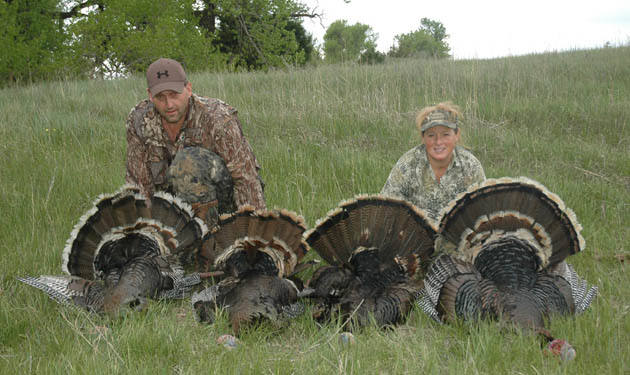
Johnny & Teri Hall Score Merriam's Turkeys In Nebraska


Scott

"Man what a trip, most likely the most fun ever on what turned out to be a one day hunt.

My wife was skeptical about going along but now after hunting with Scott, she understands the addiction, now she is hooked also and can't wait to come back.

I'd highly recommend hunting with Scott, he knows his business well and at the same time will keep you fully entertained, genuine great guy to be around and did I mention the hunting was great too"

Johnny & Teri Hall
Jonesboro,LA

Thursday, April 28, 2011

Scott Croner "The Nebraska Turkey Interceptor "


Scott hunts turkey like a Nebraska lawman hot on the trail of a escaped convict !!! I arrived at 12:30 p.m.on Friday, with cloudy sky's and winds blowing in excess of 20 mph which are not ideal hunting conditions. I was back at the lodge with 2 long beards by 5:00p.m.

The next morning Scott set me up on a location he had scouted early in the season. Needless to say, I took care of business at 10 yards with my third Merriam at 7:30 a.m. I called Scott to come pick me up and when he arrived, the back of his Suburban was stacked with gobblers harvested by three of his repeat hunters that he guided on a hunt that morning. I've hunted with so called guides in Kansas and Alabama, but Nebraska Hunting Co. is the real deal. I will be back next year with several of my clients. ( 5) Stars*****

P.S. be sure and tip the cook-best prime rib west of the Mississippi!

Greg Hill
870-312-1482
El Dorado,Arkansas

Wengler & Weathers Team Up On Nebraska Merriam's, Rio's and Hybrids


Amanda and Brent team up to harvest 4 mature gobblers in less than 24 hours.

Tuesday, April 26, 2011

Slam - A - Rama By John Ferris - Spring Turkey Hunt In Nebraska


Scott doesn’t just put you on the birds he quickly adapts to what you are looking to get out of your hunt and delivers. These are wild free-range non-pressured birds that will give you a unique hunting experience.

I have never passed up a 2-year-old gobbler in my life. On my hunt I passed up at least ½ dozen of them and scored two trophy birds. Scott put me on more birds in a three-day hunt than I see all season in my home state.

Scott knows where to find the birds and has a technique that will amaze you - something you will need to see to believe. My hunt with Scott had many encounters with the turkeys just yards away - that left my heart pumping and me breathless.

100,000 acres, 1 guide, and limited hunters – you do the math - a premium hunting experience. You should go on a Nebraska Merriam's turkey hunt with Scott Croner.

John Ferris
New York
April 2011 Turkey Hunt

Monday, April 18, 2011

Opening Weekend Nebraska Merriam's Turkey Hunting

Merriam's Turkey Hunting

Well opening weekend was as productive as ever 12 gobblers in less than 24 hours even with a little snow on the ground.

Wednesday, April 06, 2011

Barbecued Wild Turkey


Ingredients

One stick (1/2 cup) margarine
1/2 cup chopped green onions or chives
1/4 cup lemon juice
1 Tbsp. thyme and savory, mixed
1 cup broth
3 Tbsp. parsley

Directions

Cut turkey into pieces across the grain. Cook onions until tender in butter, add other ingredients. Bring to a full boil. Cover each piece of turkey with this mixture. Baste often on grill. Cook 45 to 55 minutes or until done.

Wednesday, March 30, 2011

Merriam's Spring Shotgun Season Starts April 16, 2011 - Checklist

Equipment:
Shotgun
Turkey loads
Turkey choke tube
Patterning targets
Camo blind — where legal
Seat, cushioned stool
Shotgun sling
Turkey decoys
Camera
Lo Boy
Lite Chair
Monopod gun rest
ThermaCELL
Compass Maps
Knife
Ratchet cutters
Insect repellent
Flashlight
Trail ribbon
Binoculars
Camo tape
Cooler
Water bottle
First aid kit

Clothes:
Camo gloves
Camo facenet
Camo paint
Camo make-up
Camo shirt
Camo pants
Camo jacket
Camo turkey vest or pack
Camo cap
Camo socks
Camo undershirts
Rain suit

Calls:
Box call
Diaphragm calls
Slate or glass pot & peg call
Glass call
Gobble call
Tube call
Push-pin call
Turpin/wingbone call
Crow/locator call
Owl hooter call locator calls

Call Accessories:
Box call chalk
Sandpaper
Call lanyard
Box call holster

Archery gear:
Bow (camouflaged)
Broadheads
3-D Camo clothes
3-D targets

To Do:
Get license/turkey tags
Pattern shotgun

Tuesday, March 15, 2011

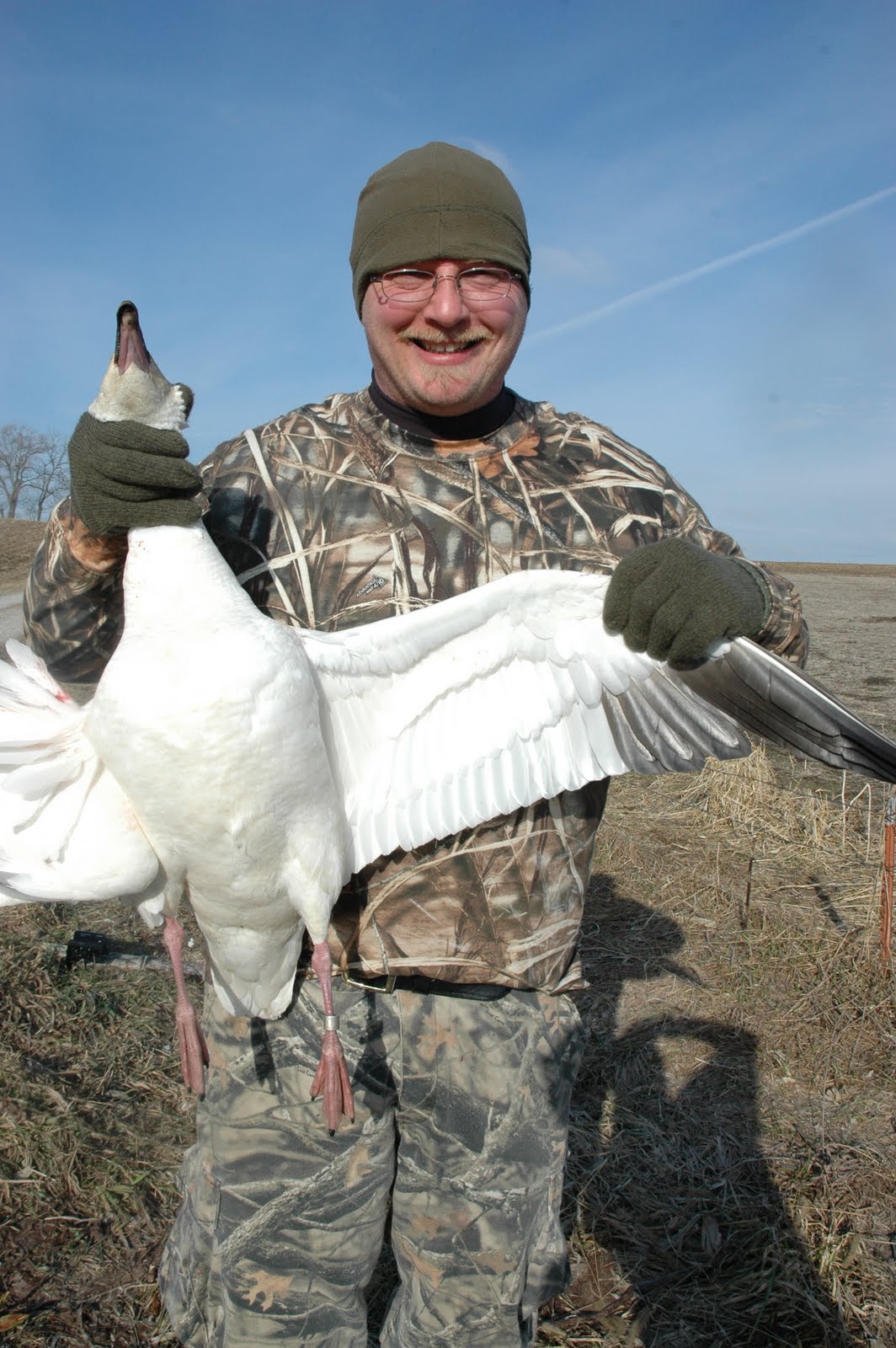
Mike Lewellen And His Banded Snow Goose


Mike enjoys harvesting his first banded snow goose.

To Book Your Hunt
Call 402-304-1192
www.snowgooseguides.com

Tuesday, March 08, 2011

2011 Snow Goose Season Continues - Juvies Are Coming


Well I would use alot of words to describe the picuture but i think that everyone can see it. Some of our days have been slow now doubt even a couple of one birds days. However, I can gurantee that the biggest days are still to come. Snow Goose Guides, Mound City, Missouri

Wednesday, March 02, 2011

Snow Goose Season 2011 - Mound City, Missouri


The season continues to roll on with over 1.5 million snow geese either on Squaw Creek NWR or in the area there are pleanty of geese. However the snow geese here are the oldest and smartest and if you make one mistake decoying them they are gone. We had an experienced group from Nebraska yesterday and they didnt make any mistakes. Oh I forgot to mention someone was sleeping when we took the shot on one bunch.

Sunday, February 13, 2011

Spring Snow Goose Hunting - In The Midst Of Chaos

Scott,


It was great talking to you today and I can't wait to to hunt with you again this year. Everything you told me was right on.The timing, decoys, layout blinds.... everything was great. It's Hard to findguides that REALLY know whats going on and not just filling a field. Snow Goose Guides - Mound City, Missouri


Sean Gillooly

Friday, February 11, 2011

Guided Spring Snow Goose Hunts: Conservation Action

Spring Snow Goose Hunting in Early Spring


WHITE OUT: Mid Continent population studies indicate that between the mid 1960s and now, snow goose numbers grew from an estimated 50,000 to more than one million. Officials predict that by the middle of the next decade, roughly two million snowies might compete for limited space, doubling in current size. (Delta Waterfowl media photo)


By Steve Hickoff

The so-called regular waterfowl seasons may be over, but don’t put your gear away just yet. Clean it, for sure, but keep it ready to roll . . .

In the heavily human-populated Atlantic Flyway where I write this — and elsewhere around the United States — it’s not just humankind competing for space. Snow goose numbers are at all-time highs, migration time depending.

That’s good news for hunters. In late-winter and early-spring you can jumpstart your waterfowl season, extending it into spring turkey time.

Snow goose numbers exceed available food and habitat in many areas. As a result, federal and state wildlife management organizations now offer expanded seasons for these waterfowl in many locations. By conservation order, the U.S. Fish and Wildlife Service has specifically mandated this effort to control growing numbers.

Though they’re hunted elsewhere, eight states in the Atlantic Flyway were open last year under the “conservation order” for late-winter and early-spring snow goose hunting. These included North Carolina, Virginia, Maryland and Delaware to the south, and New Jersey, Pennsylvania, New York and Vermont to the north. Check your current regulations as changes may appear there.

More geese? Waterfowl hunters couldn’t be happier. So how do you hunt them?

First check to see if your state offers a late-winter or early-spring season. Many do.

Once licenses, permits and stamps are secured, assess your waterfowling gear. You may need to amp up your decoy holdings with snow goose fakes. Shells and full-body options are widely available for this growing sport.

As with real estate, location is everything. Scout for these so-called “light geese” in agricultural haunts. Gain permission from landowners to hunt these spots. Be there before dawn the next morning to set your spread of dekes.

Huddled in a layout blind, snow goose calls on a lanyard around your neck, non-toxic loads chambered in your shotgun, you’re ready to roll.

Some other tips to hunting these light geese include:

Your effort to find them might begin where they roost, and include locating a nearby field where they feed and/or might forage. Study them for a pattern of use. They’ll often move and feed early in the day and later in the afternoon, loafing elsewhere during midday. Sometimes too they just move on.

Study maps, drive and glass fields, and seek landowner permission at all costs, explaining what you’ll be doing and even why. Set your spread at midday for later afternoon hunts. If it feels right, get back there the next morning too. Don’t pressure a spot; then again, hunt it while it’s hot and even just a little warm.

As camouflage goes, wear white if snow covers the ground, or standard options if you’re in a layout blind or using natural cover. Blend in, no matter what. Snowies feel the pressure, and adjust accordingly. If possible, hide all unnatural evidence, including your truck, trailer and four-wheeler. Make it look real.

Spreads should consist of as many snow goose decoys as possible. Full body snows, shell fakes, and silhouettes should round off your presentation. It’s not unusual for a hardcore snow goose hunter to place several hundred to even 1,000 or more decoys out in a field, and even use wing flags to impart movement to the spread.

Thursday, January 13, 2011

Merriam's Turkey Hunting Is For Everyone


My trip to Nebraska to hunt turkeys with Scott Croner in May 2010 turned out to be one of the greatest hunting trips I have taken. The accommodations where excellent and Scott's knowledge and abilities made this trip memorable. Scott is the hardest working guide I have ever encountered, and his drive to provide a successful and enjoyable hunt is second to none. Scott thanks again for the great hunt and look forward to hunting with you again."
Ron Bieterman